
Rogers PCB projects can become expensive when material choice, stackup, panel size, impedance testing, surface finish, and production quantity are not reviewed early. But cost control does not mean replacing the material casually or lowering the RF requirement. For high-frequency PCB projects, that approach often creates more risk than savings.
A better cost-control strategy is to protect the RF-critical areas while removing unnecessary manufacturing cost from non-critical areas. This means reviewing the real signal path, material thickness, stackup, board size, panel utilization, via structure, copper thickness, surface finish, and prototype-to-batch plan before production.
For buyers, the goal is straightforward: reduce avoidable cost without changing the RF behavior the design requires.
Quick Summary
- Rogers PCBcost can often be controlled by reviewing material grade, laminate thickness, stackup structure, panel utilization, copper thickness, surface finish, impedance testing scope, and production quantity.
- Material substitution should not be the first cost-saving method, because it may affect impedance, signal loss, antennatuning, and test results.
- Hybrid stackupsmay reduce cost when only part of the board carries high-frequency signals.
- A complete quotation package helps the manufacturer suggest practical cost options without guessing.
Do Not Start by Replacing the Material
The fastest way to reduce a quotation is often to ask for a lower-cost material. In Rogers PCB projects, this can be risky.
The material may have been selected for a specific reason: Dk stability, low loss, antenna behavior, impedance control, frequency range, or customer specification. If it is replaced without an RF review, the board may still be manufacturable but fail testing. See Rogers material datasheets for Dk and Df reference values before making any substitution decision.
Before considering material substitution, check:
- Working frequency
- Signal path length
- Loss sensitivity
- Antenna or non-antenna design
- Controlled impedance requirement
- Customer material approval
- Prototype test history
- Batch production requirement
If the board has already passed testing with one Rogers material, changing material solely for cost can trigger a new validation cycle — which often costs more than the material saving.
Review Whether the Whole Board Needs Rogers Material
Not every section of a PCB requires high-frequency material. Some boards include RF traces in one area and digital, control, power, or mechanical support sections elsewhere. In these cases, a hybrid stackup may help control cost while keeping Rogers material on the RF-critical layers.
This approach may work for:
- RF moduleswith control sections
- Communication boardswith mixed RF and digital circuits
- Antenna boardswith support layers
- Microwave boardswith non-critical routing areas
- Industrial RF boards with power and control sections
However, hybrid stackups must be reviewed carefully. Material compatibility, lamination process, drilling, plated through-hole reliability, warpage, and impedance must all be verified before production.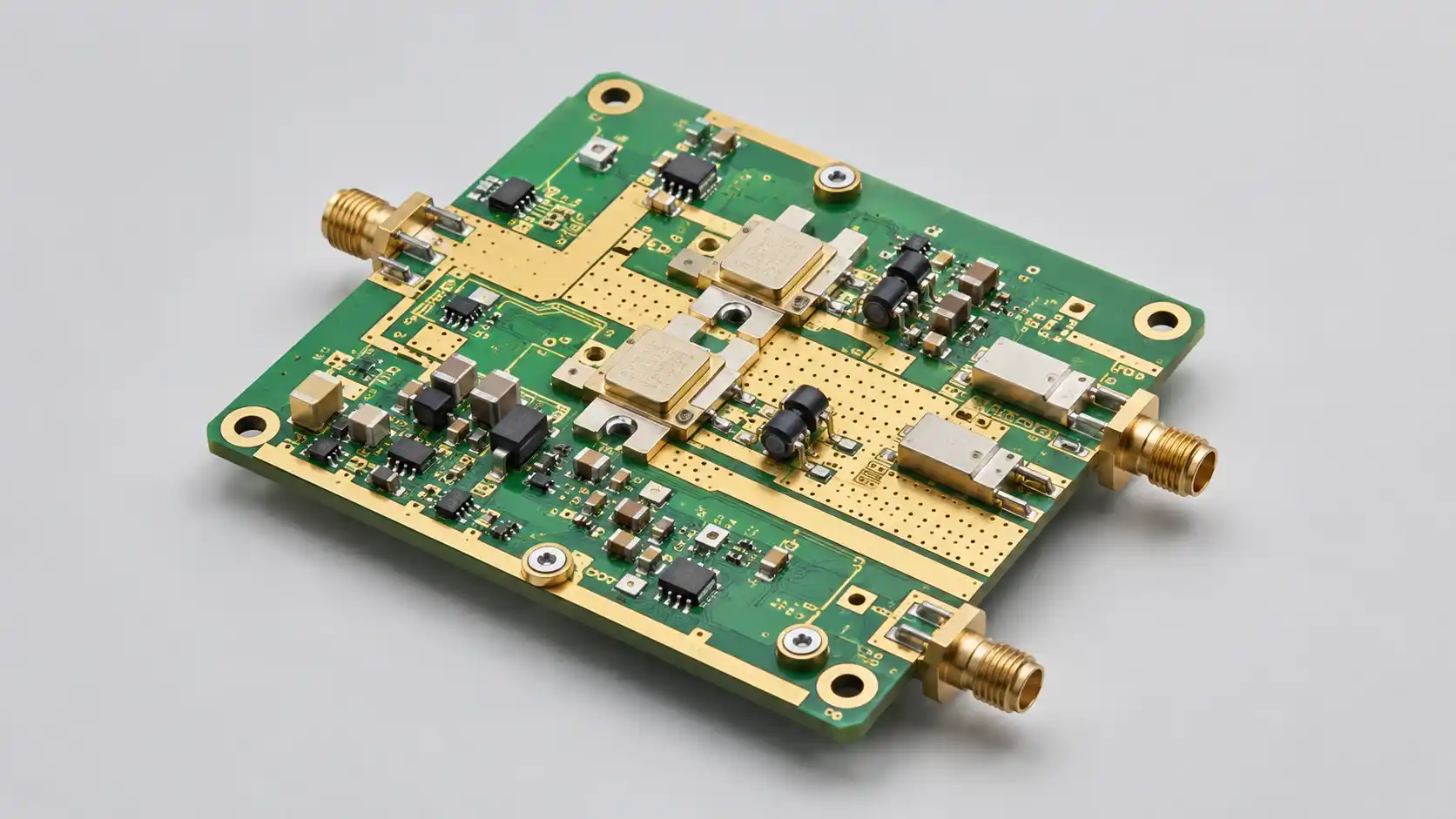
Choose Material Thickness Carefully
Material thickness affects both RF performance and cost.
A thicker or less common laminate may increase cost, lead time, or material waste. A thickness that is difficult to source may also create delays during repeat orders. The Rogers MWI-2021 calculator can help verify whether a given thickness and trace width combination meets the impedance target before committing to a specific laminate.
Before confirming the stackup, buyers and manufacturers should review:
- Required impedance target
- Available material thickness options
- Trace width feasibility
- Final board thickness
- Copper thickness
- Mechanical requirement
- Material availability
- Batch supply stability
Sometimes a small stackup adjustment can reduce cost without changing the RF goal. But this must be done with impedance recalculation — not by rough judgment.
Improve Panel Utilization
Panel utilization is often overlooked in Rogers PCB quotations. If the board size does not fit well into standard production panels, material waste increases. This is especially relevant for higher-cost laminates, where wasted panel area directly adds to unit cost.
Panel-related cost factors include:
- Board size and shape
- Panel size
- Routing method
- Tooling holes
- Edge clearance
- Test coupon area
- Impedance coupon requirement
- Quantity per panel
- Breakaway tabs or V-cut feasibility
For prototypes, panel utilization may not seem critical. For batch production, it can affect total cost significantly.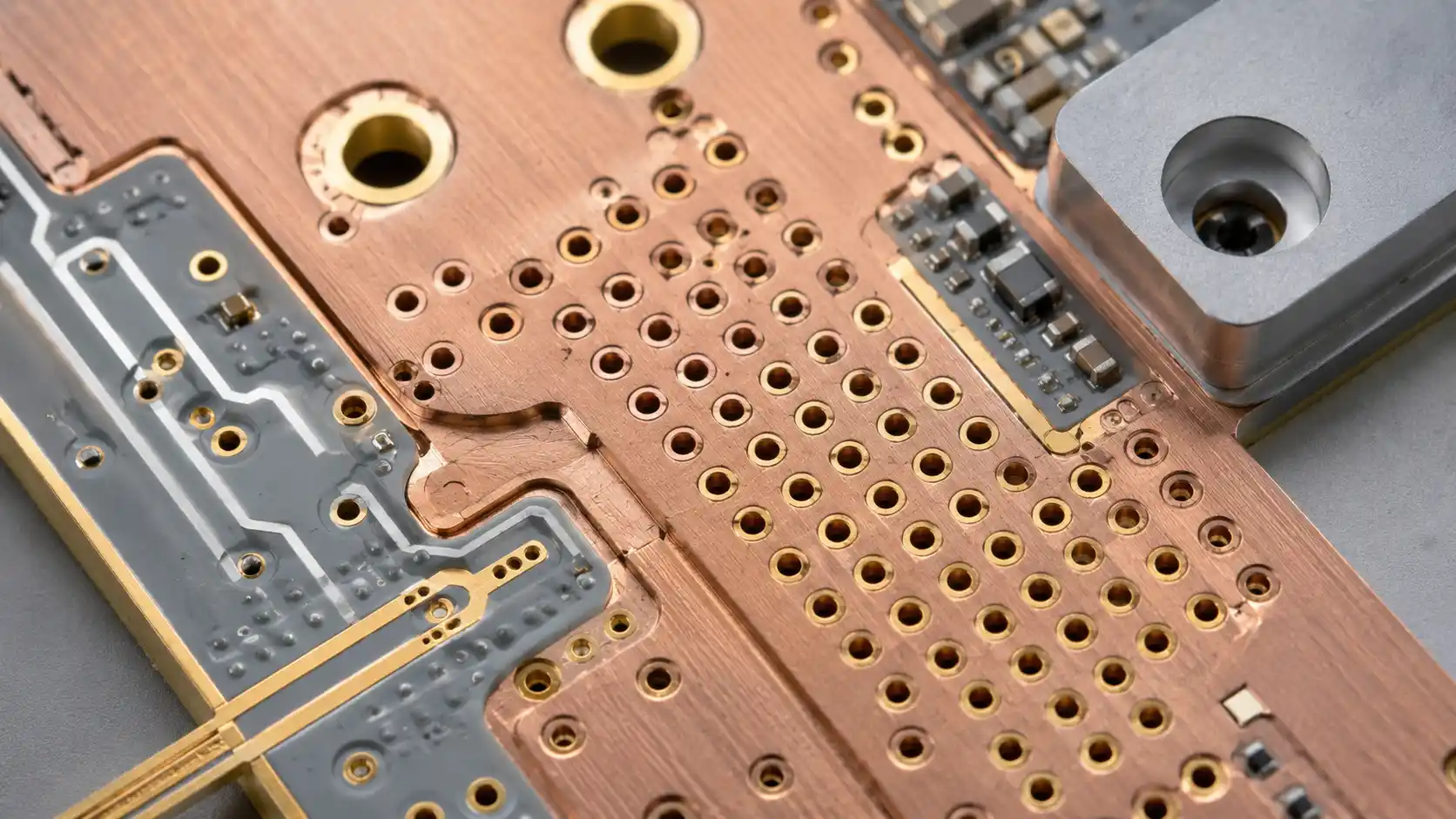
Check Whether Every Impedance Test Is Needed
Controlled impedance is often required in Rogers PCB projects. The issue is not impedance testing itself — it is unclear or over-broad impedance requirements.
A well-defined impedance request should specify:
- Target impedance value
- Tolerance (±5%, ±10%, etc.)
- Layer location
- Trace structure (microstrip, stripline, etc.)
- Reference plane
- Single-ended or differential requirement
- Test coupon requirement
- Which traces are RF-critical
If every trace is treated as controlled impedance without real need, quotation and testing complexity increases unnecessarily. If the requirement is missing entirely, the board may be produced incorrectly. IPC-2141A and IPC TM-650 define the standard methodology for controlled impedance specification and testing.
The best approach is to clearly identify which RF paths require controlled impedance and what tolerance applies.
Avoid Over-Specifying Copper Thickness
Copper thickness affects current handling, impedance, etching tolerance, heat spreading, and cost.
Some Rogers PCB projects genuinely require thicker copper for power, heat, or mechanical reasons. Others use a default copper thickness without verifying whether it is necessary.
Before confirming copper thickness, review:
- RF trace geometry requirements
- Impedance target
- Power requirement
- Thermal requirement
- Etching tolerance at the required trace width
- Plated through-hole requirement
- Final copper thickness after plating
- Assembly requirement
Over-specifying copper can make fine RF traces harder to control during etching. Under-specifying copper can create thermal or reliability problems. The correct choice depends on the design requirement, not a default habit.
Select Surface Finish by Function
Surface finish can affect cost, solderability, storage life, RF-sensitive exposed areas, connector regions, and assembly process.
Common options include:
- ENIG
- Immersion silver
- OSP
- Lead-free HASL
- Hard gold for contact areas
- Customer-specified finishes
ENIG is widely used because it provides flatness and stable solderability. Hard gold may be required for repeated-contact areas, but should not be applied across the entire board unless necessary. Immersion silver may be considered for some RF-sensitive designs where surface conductivity matters.
Surface finish should match the function of the board. Selecting a premium finish everywhere when only one contact area requires it adds unnecessary cost.
Reduce Cost Through Better File Preparation
Incomplete files increase engineering time, quotation uncertainty, and communication delay — all of which add indirect cost.
A complete Rogers PCB quotation package should include:
- Gerber files
- Drill files
- PCB stackup
- Rogers materialrequirement
- Working frequency
- Controlled impedance table
- Board thickness
- Copper thickness
- Surface finish
- Quantity
- Prototype or batch plan
- Application background
- Special inspection requirement
When information is missing, the manufacturer may quote conservatively or require multiple rounds of clarification. Clear, complete files make it easier to identify realistic cost-saving options from the start.
Manage Prototype and Batch Separately
Prototype cost and batch cost should not be evaluated in the same way.
For prototypes, the priority is usually speed, RF validation, and risk reduction. For batch production, material utilization, repeatability, panelization, yield, testing method, and supply stability become more important.
Buyers should confirm before batch production begins:
- Will the same material be used in batch production?
- Will the stackup remain unchanged?
- Is impedance testing required for every batch?
- Can the panel layout be optimized for volume?
- Will surface finish remain the same?
- Is the approved prototype process repeatable at volume?
A Rogers PCB prototype built with a special one-time material or temporary stackup may not support stable batch production. This is especially important for radar systems, 5G equipment, and aerospace RF applications where batch consistency is a hard requirement.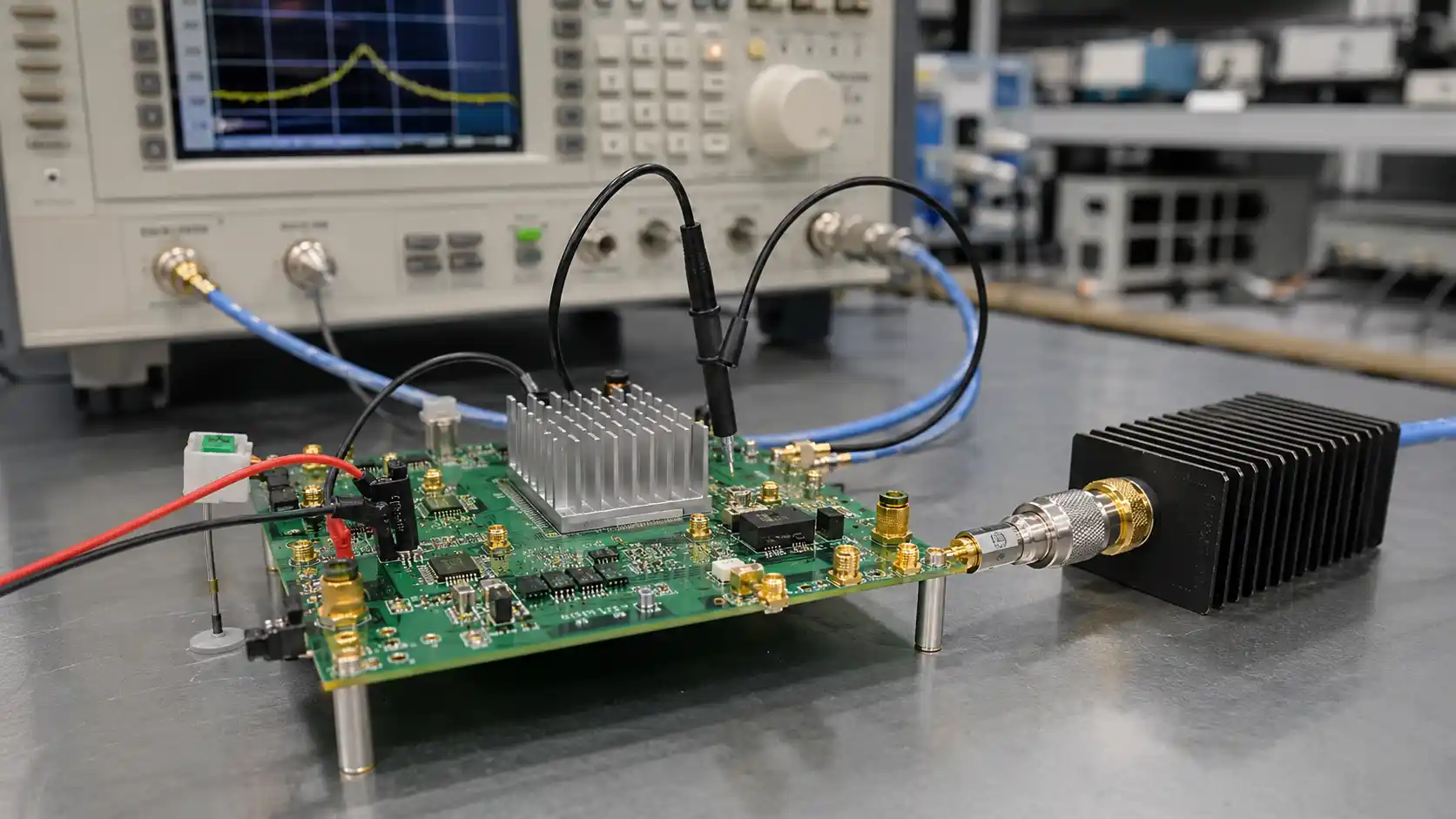
Common Cost-Control Mistakes
Common mistakes that create more cost than they save:
- Changing Rogers materialwithout an RF review
- Using Rogers materialacross the entire board when only one layer requires it
- Choosing an uncommon laminate thickness without checking availability
- Ignoring panel utilization in Rogers material projects
- Over-specifying copper thickness
- Requesting unclear or overly broad impedance testing
- Selecting surface finish by purchasing habit rather than function
- Sending files without stackup or impedance table
- Not separating prototype and batch cost review
- Comparing unit price without accounting for production risk
A lower quotation can become expensive if it results in testing failure, redesign, delayed delivery, or unstable repeat production.
Conclusion
Rogers PCB cost control should protect RF performance first. The safest savings typically come from better stackup planning, material thickness review, hybrid structure evaluation, panel utilization improvement, clearly defined impedance requirements, practical copper thickness selection, suitable surface finish, and better prototype-to-batch planning.
For buyers, the best question is not “How can we make this board lower cost at any price?” The better question is: which costs can be removed without changing the RF behavior the design requires?
A good high-frequency PCB manufacturer should help review material, stackup, impedance, panel usage, surface finish, and repeat production risk before suggesting any cost-saving option.
For technical reference, see IPC-2141A (Controlled Impedance Circuit Boards), IPC TM-650 (Test Methods Manual), and the Rogers MWI-2021 Impedance Calculator for material selection and impedance design guidance.