
F4B and Rogers PCB materials are often compared when a project needs better high-frequency performance than standard FR4, but the buyer also needs to control material cost and production risk. Both can be used in RF PCB, microwave PCB, antenna PCB, wireless communication boards, and industrial high-frequency devices — but they do not serve the same decision point.
Rogers materials are widely recognized in RF and microwave designs, with many material families used for low loss, controlled impedance, antenna tuning, radar circuits, and communication systems. F4B is often reviewed when the project needs a cost-balanced high-frequency material and the RF requirement is not as demanding as premium microwave laminates.
The right choice should come from the design requirement, not only the material name. Frequency, Dk, Df, dielectric thickness, stackup, signal loss, impedance tolerance, manufacturing experience, and batch repeatability should all be reviewed before production.
Quick Summary
- F4Bcan be considered for cost-sensitive RF and microwave PCB projects where standard FR4 is not sufficient, but the design may not require premium high-frequency laminate performance.
- Rogers materialsare often selected when the project needs stronger material documentation, known RF performance, lower loss options, and broad engineering acceptance.
- F4Bmay help control cost in some RF communication, antenna, wireless, and industrial RF projects, but it should not be used as a direct replacement for Rogers without engineering review.
- The final decision should be based on working frequency, signal loss target, Dk, Df, stackup, controlled impedance, manufacturing capability, and repeat production needs.
Where F4B May Be Considered
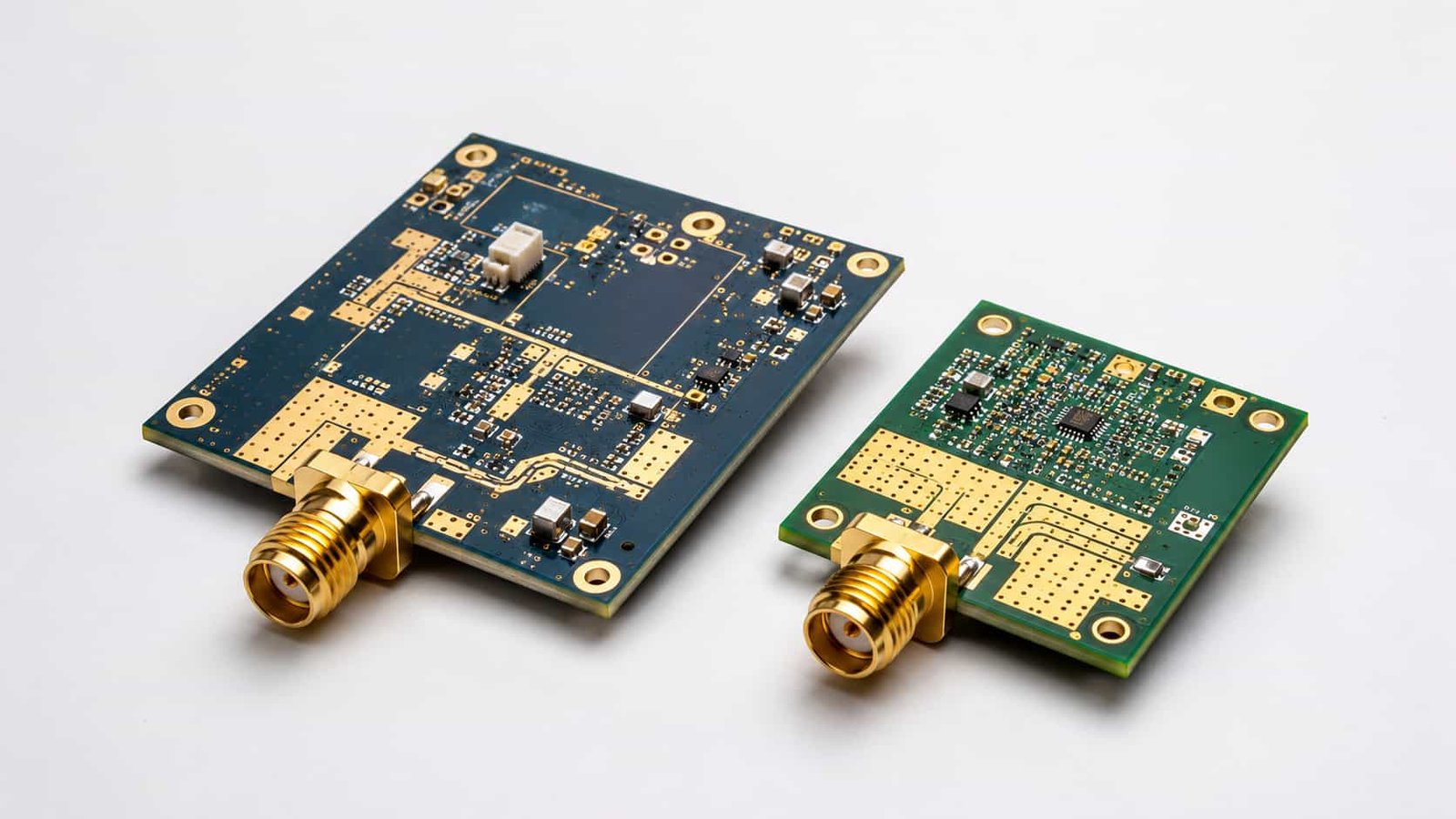
F4B is often reviewed for projects that sit between standard FR4 and higher-end RF laminates.
Common applications include:
- RF communication boards
- Antenna feed circuits
- Wireless modules
- Industrial RF equipment
- Microwave signal boards
- RF test fixtures
- Cost-sensitive high-frequency products
- Prototype RF projects
In these cases, the buyer may need better RF behavior than FR4, but the product may not justify the cost of higher-end materials across the whole board. F4B can be a practical option, but only when the signal requirement is clearly understood. It should not be chosen solely because the project needs a lower material cost.
Where Rogers Materials Are Usually Stronger
Rogers materials are typically preferred when RF performance, documentation, design confidence, and repeatability matter most.
Common Rogers PCB applications include:
- Microwave circuits
- Radar electronics
- Satellite communication
- Antenna systems
- 5G communication devices
- RF front-end boards
- High-frequency test equipment
- Wireless infrastructure
- Low-loss signal paths
Rogers materials are often easier for engineers to specify because many grades — such as RO4003C, RO4350B, and RO3003 — are already familiar in RF and microwave design. Full material specifications are available at rogerscorp.com. This familiarity helps during customer approval, prototype testing, and supplier communication.
For demanding microwave paths, radar boards, sensitive antennas, or aerospace RF applications with strict test requirements, Rogers materials may significantly reduce technical uncertainty.
Key Difference: Cost Target vs RF Margin
The main difference is usually not whether F4B can work. The real question is how much RF margin the project needs.
F4B may be reviewed when the project has moderate RF requirements and cost control is a priority. Rogers may be preferred when the design needs stronger confidence in low loss, Dk stability, impedance behavior, or customer-approved material history.
A practical review should ask:
- What is the working frequency?
- How long is the RF signal path?
- Is insertion loss tightly budgeted?
- Is antenna tuning sensitive to Dk variation?
- Is controlled impedance required?
- Will the board be tested in batch production?
- Is the material specified by the end customer?
If the design has little room for RF variation, the safer choice may be Rogers. If the requirement is more flexible, F4B may be worth reviewing with a full engineering assessment.
Dk, Df, and Stackup Review
Material comparison should not stop at the brand name.
Dk affects impedance, trace width, antenna element size, and RF layout geometry. Df affects dielectric loss and signal attenuation. Dielectric thickness affects both impedance and manufacturability.
The stackup should clearly define:
- Material type
- Layer count
- Dielectric thickness
- Copper thickness
- RF signal layer
- Ground reference plane
- Final board thickness
- Surface finish
- Controlled impedance target and tolerance
- Via structure
If F4B is used as an alternative to Rogers, the stackup and impedance must be recalculated from the real production values — not assumed to remain the same. A similar board thickness does not mean the RF behavior will be equivalent. The Rogers MWI-2021 calculator and IPC-2141A are useful references for verifying impedance under different material assumptions.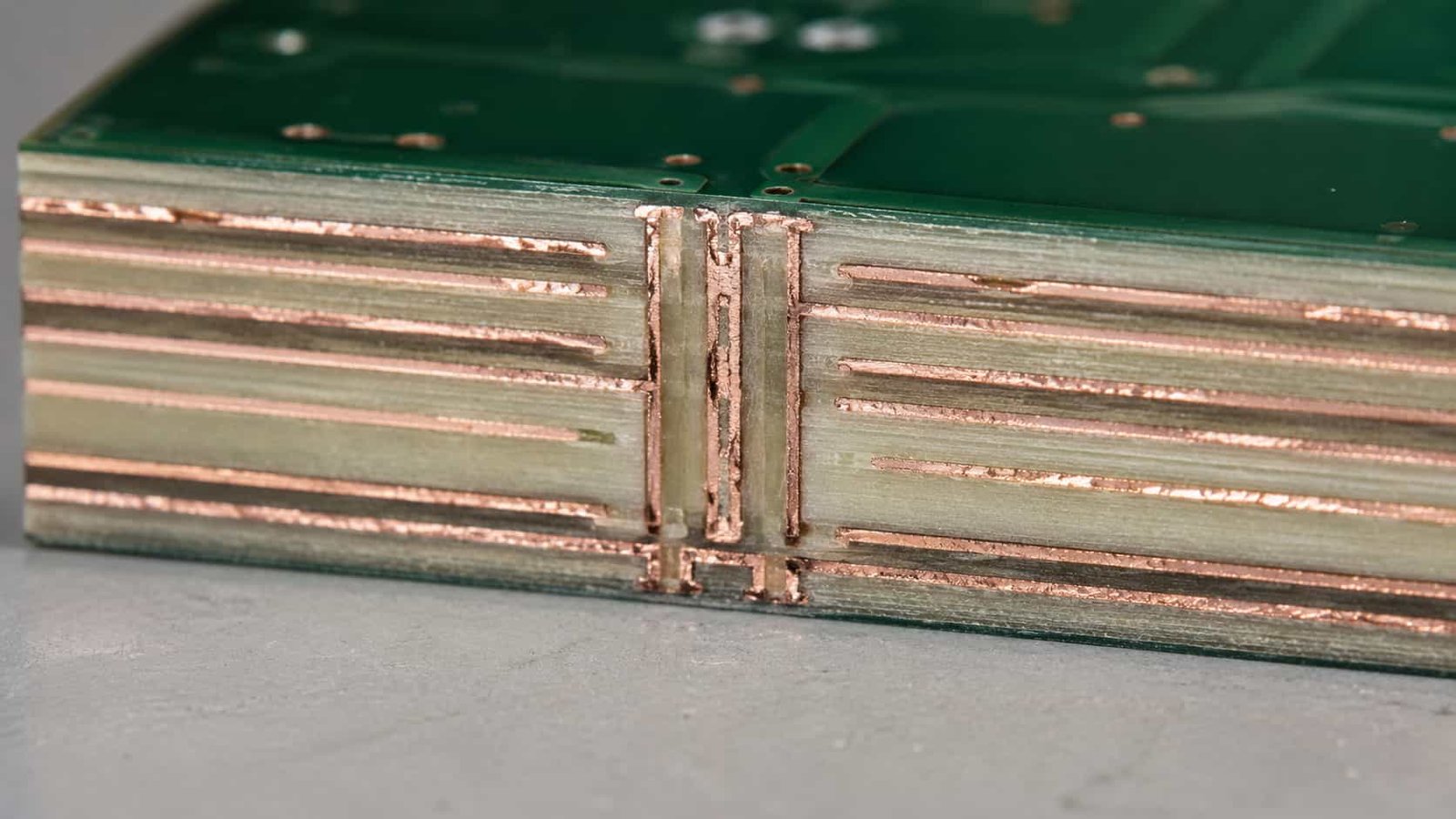
Manufacturing and Processing Risk
Manufacturing experience matters for both material choices.
F4B may have different processing behavior compared to Rogers materials. Rogers materials also vary significantly by series and grade, so the factory should review the exact laminate rather than treating all Rogers boards as identical.
Before production, the manufacturer should check:
- Material availability and lead time
- Drilling behavior
- Plated through-hole reliability
- Copper adhesion
- Etching tolerance
- Dimensional stability
- Lamination requirement
- Surface finish compatibility
- Impedance testing method
- Batch repeatability
A material that looks cost-effective during quotation may become expensive if process yield is unstable or the board fails RF testing. Impedance testing should follow the methodology defined in IPC TM-650.
Can F4B Replace Rogers?
In some cases, F4B can be reviewed as a cost-balanced alternative to Rogers materials. But it should never be treated as a direct drop-in replacement without engineering review.
Material substitution may affect:
- Impedance
- Trace width requirements
- Signal loss
- Antenna tuning
- Phase behavior
- Thermal behavior
- Plated hole reliability
- RF test results
If the layout was designed around a specific Rogers material, changing to F4B may require stackup review, impedance recalculation, and in some cases layout adjustment.
For antenna boards and microwave circuits, this step is especially important because material changes can shift antenna resonance or increase insertion loss beyond the acceptable limit.
Procurement and Cost Review
From a purchasing perspective, F4B may reduce material cost in some projects. But the lowest laminate price is not always the lowest total project cost.
Buyers should compare:
- Material price
- Material availability and supply stability
- Lead time
- Processing risk
- Prototype success rate
- Testing requirement
- Panel utilization efficiency
- Batch consistency
- Customer approval requirement
If a lower-cost material leads to redesign, failed RF testing, or unstable repeat orders, the final project cost may be significantly higher than expected.
A sound cost decision protects the RF function first, then removes unnecessary cost from non-critical areas of the project.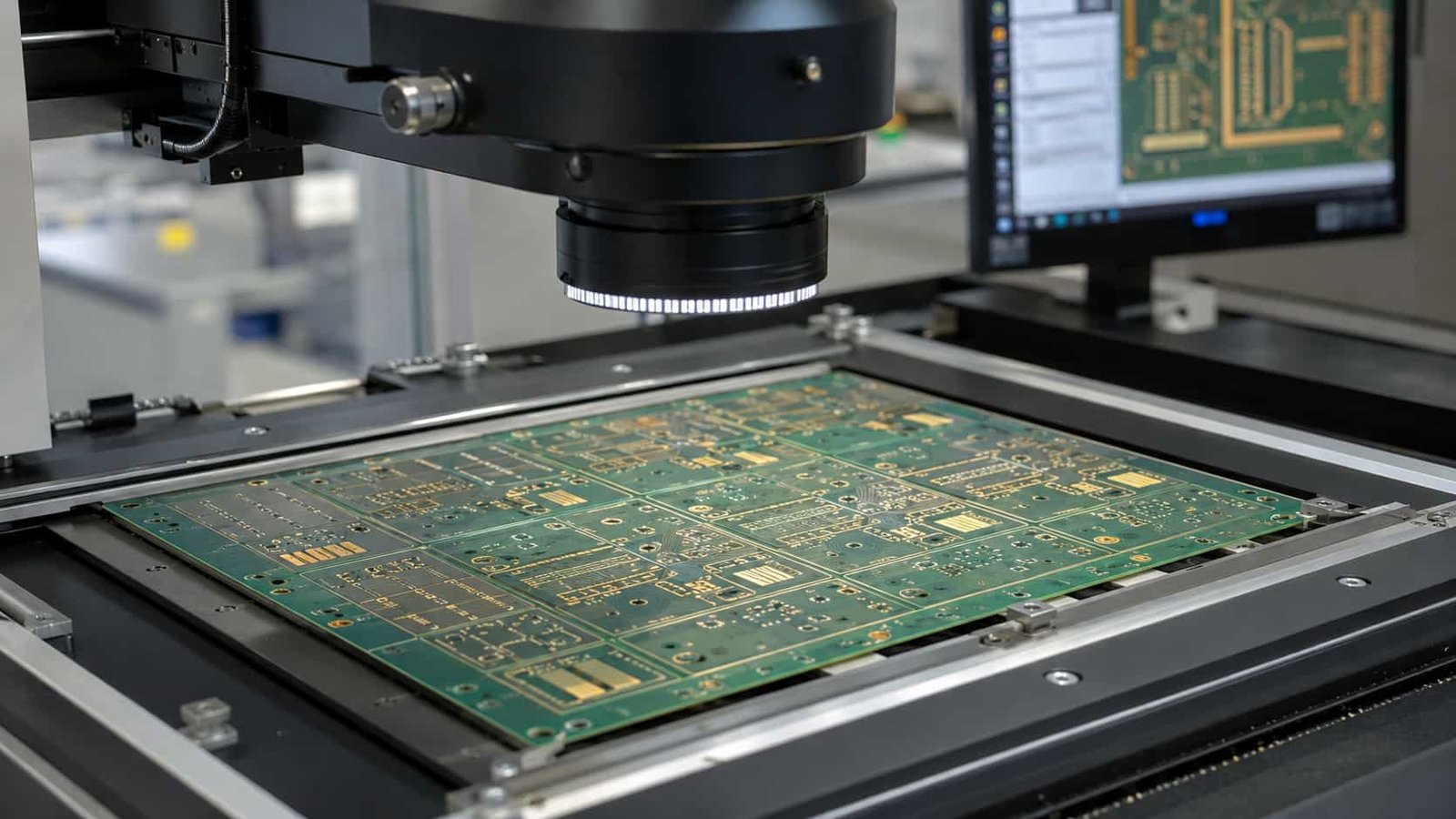
What Buyers Should Provide for Quotation
To compare F4B and Rogers materials properly and receive a useful quotation, buyers should prepare:
- Gerber files
- Drill files
- PCB stackup
- Preferred material (if available)
- Working frequency
- Controlled impedance requirement
- Board thickness
- Copper thickness
- Surface finish
- Quantity
- Prototype or batch plan
- Application background
- Signal loss requirement (if available)
If the buyer is not yet sure which high-frequency material to choose, working frequency and application background are the most useful starting points. The manufacturer can then review whether F4B, Rogers, PTFE, Taconic, or a hybrid stackup is most appropriate for the design.
Common Mistakes to Avoid
Common mistakes when comparing F4B and Rogers materials:
- Choosing F4Bonly to reduce material cost, without checking RF requirement
- Choosing Rogersonly because it sounds safer, without reviewing whether it matches the real application
- Changing material after layout is complete without a full RF review
- Comparing only Dk while ignoring Df and dielectric thickness
- Sending files without stackup information
- Ignoring controlled impedance requirements
- Not checking material availability for batch production
- Overlooking prototype-to-batch consistency
- Ignoring drilling and plated through-hole risk differences between materials
- Not explaining the working frequency and application background
These issues rarely appear during visual inspection. They typically surface during RF testing, system integration, or repeat production.
Conclusion
F4B and Rogers PCB materials can both be useful in RF and microwave PCB projects, but they fit different risk levels and cost targets.
F4B may be a practical option for cost-sensitive RF communication boards, antenna circuits, wireless modules, and industrial RF products when the performance requirement allows it. Rogers materials are often preferred when the project needs stronger RF margin, clearer material documentation, lower loss options, or customer-approved high-frequency performance.
For buyers, the safest decision is to compare materials through the real design requirement: working frequency, loss target, stackup, impedance, manufacturability, cost, and repeat production. The right material is not always the highest-performance option or the lowest-cost option — it is the material that meets the RF requirement and can be produced reliably.
For technical reference, see IPC-2141A (Controlled Impedance Circuit Boards), IPC TM-650 (Test Methods Manual), and the Rogers MWI-2021 Impedance Calculator for material selection and impedance design guidance.