
Aluminum PCB Manufacturer — LED, EV Power, Automotive
Riching PCB manufactures aluminum PCB (metal core PCB / MCPCB) for LED lighting, EV power electronics, automotive and industrial thermal management applications. Thermal conductivity 1.0–4.0 W/m·K. IATF16949 and ISO13485 certified. ENIG surface finish. SMT assembly available. No MOQ, from 1 board.
Home » aluminium PCB manufacturer » Aluminum PCB Manufacturer — LED, EV Power, Automotive
Table of Contents
1–4
W/m·K thermal
conductivity grades
5–7
day prototype
from DFM approval
IATF16949
& ISO13485
certified
No MOQ
From 1 board
SMT assembly available
Aluminum PCB Structure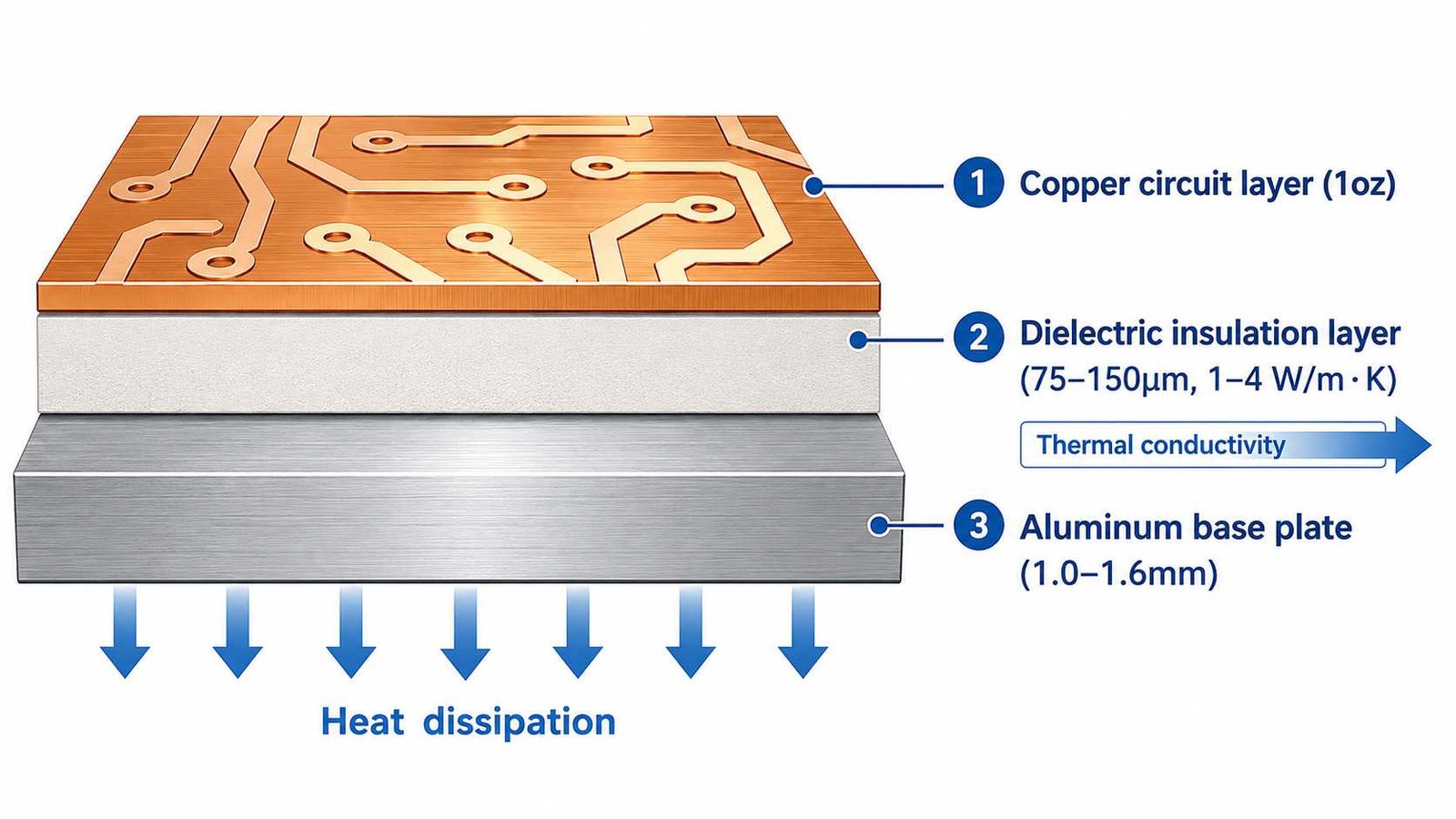
Aluminum PCB consists of three layers: a copper circuit layer (typically 1oz), a thermally conductive dielectric insulation layer (75–150μm), and an aluminum base plate (1.0–1.6mm). The dielectric layer conducts heat from the circuit to the aluminum base while maintaining electrical isolation. Thermal conductivity of the dielectric determines how efficiently heat is transferred — standard grade is 1.0 W/m·K, high-thermal grade reaches 2.0–4.0 W/m·K for power electronics applications.
Manufacturing Capability
| Parameter | Standard | High Thermal |
|---|---|---|
| Thermal conductivity | 1.0 W/m·K | 2.0–4.0 W/m·K |
| Dielectric thickness | 75–150 μm | 50–100 μm |
| Copper weight | 1oz standard | 0.5oz–3oz available |
| Max board size | 600×600mm | 600×600mm |
| Surface finish | ENIG / HASL | ENIG / OSP |
| Voltage withstand | ≥2500V AC | ≥2500V AC |
| Lead time (prototype) | 5–7 working days | 7–10 working days |
Applications
| Application | Thermal Requirement | Note |
|---|---|---|
| LED street lighting | 1.0–2.0 W/m·K | Standard — 5–7 day prototype |
| LED high-bay industrial | 2.0 W/m·K | Standard high-thermal grade |
| EV power inverter module | 2.0–4.0 W/m·K | IATF16949, IPC Class 3 on request |
| Automotive LED headlight | 1.0–2.0 W/m·K | IATF16949 certified, halogen-free |
| Motor driver / BLDC | 2.0 W/m·K | SMT assembly available |
| Telecom power supply | 1.0 W/m·K | ENIG, controlled impedance on copper layer |
| Medical imaging illumination | 1.0–2.0 W/m·K | ISO13485, IPC Class 3 available |
Certifications
- IATF16949 — automotive quality management, for automotive LED and EV power applications. See automotive PCB manufacturer
- ISO13485 — medical device QMS, for medical imaging and surgical illumination. See medical PCB manufacturer
- ISO9001 — general quality management baseline
- IPC Class 2 standard, IPC Class 3 on request
- RoHS and halogen-free materials available
SMT Assembly for Aluminum PCB
SMT assembly on aluminum PCB requires careful reflow profile management — the aluminum base plate acts as a heat sink and affects the thermal mass during soldering. Riching PCB provides turnkey PCB assembly for aluminum PCB including paste printing, LED/component placement, reflow and AOI inspection.
How to Order
- WhatsApp: +86 13760473650
- Send: Gerber zip + NC drill + board outline drawing
- Specify: thermal conductivity grade (1.0 / 2.0 / 3.0 / 4.0 W/m·K), copper weight, surface finish, quantity
- DFM review: 4–8 hours
- No MOQ. From 1 board.
Frequently Asked Questions — Aluminum PCB Thermal Design
What thermal conductivity grade should I use for LED aluminum PCB?
What is the thermal resistance of an aluminum PCB dielectric?
Can I use a thinner dielectric to improve thermal performance?
What is the difference between aluminum PCB and FR4 for heat dissipation?
Aluminum PCB Manufacturer — Shenzhen, IATF16949 & ISO13485
1–4 W/m·K Thermal Grades · LED · EV Power · Automotive
SMT Assembly Available · No MOQ
Send Gerber + board outline. DFM review within 4–8 hours.
Specify thermal conductivity grade and copper weight.
DFM review within 4–8 hours
Request a PCB Quote
Upload your Gerber ZIP file and project requirements. Our engineering team will review your PCB material, stackup, impedance needs, surface finish, and production quantity before quoting.
Please prepare:
- Gerber files in ZIP format
- PCB material or stackup requirements
- Controlled impedance notes if available
- Prototype or batch production quantity